Sub-Total: $0.00
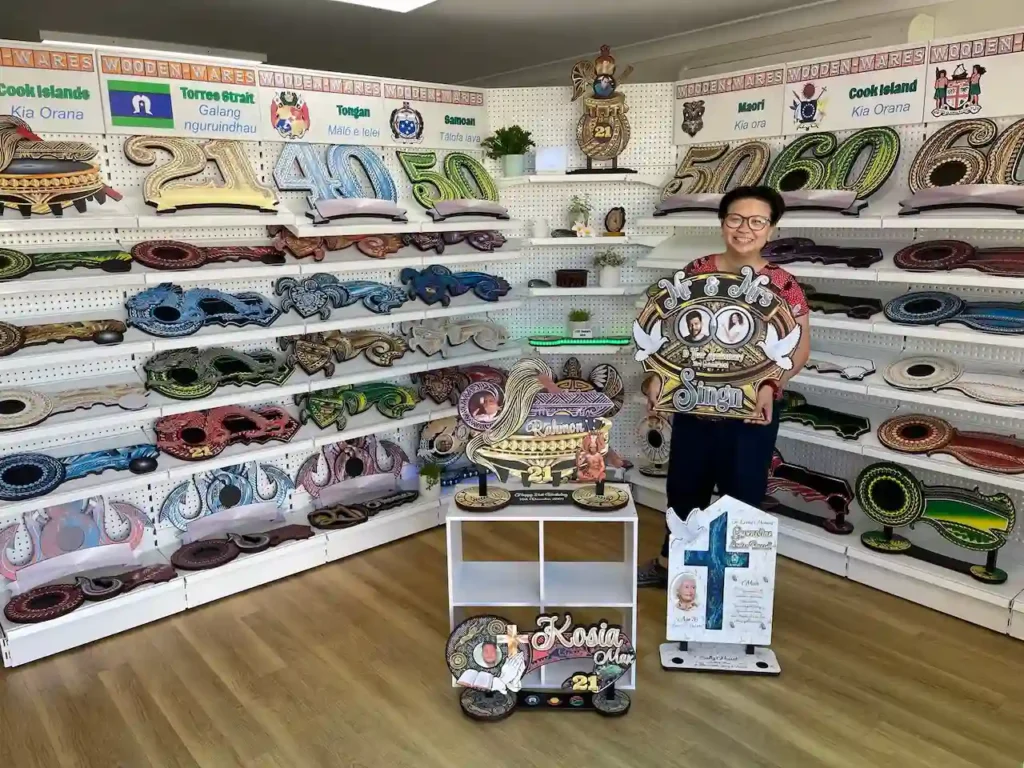
How to Choose the Perfect 21st Birthday Key in Australia
The wrong birthday key is easy to spot.
It is the one sitting in a box twelve months after the party. The design was attractive enough on the day but it did not feel personal. The colours were fine but they were not their colours. The photo was clear enough but the overall result felt generic.
The right birthday key never ends up in a box.
Choosing the right one is not complicated. But it does require asking a different set of questions than most people start with. This guide covers those questions and why the answers determine everything about the final result.
See Australia’s most advanced custom birthday keys.
Start With the Person — Not the Design
Most people start by looking at designs. That is the wrong place to start.
The design is the last decision. The first decision is the person.
Who are they? What do they actually love — not what they are supposed to love at 21, but what they genuinely use, wear, decorate with, and talk about? Are they bold or restrained? Cultural or modern? Sentimental or minimal?
A birthday key built around honest answers to those questions will feel completely different to one chosen because it looked good on someone else’s table.
Start with the person. The design follows naturally.
Understand What the Key Actually Represents
A 21st birthday key is not just a decoration.
It is a symbolic gift rooted in a tradition that predates most modern celebration products. The key represents adulthood the key to the door, the key to independence, the key to a new chapter. Families give it because it carries a meaning that a voucher, a piece of jewellery, or a cash gift simply cannot.
When the symbolic weight of the gift is understood, the design decisions that follow it change completely.
A key designed with that meaning in mind with the birthday person’s identity at its centre, with family love expressed through the details becomes a genuinely meaningful object. A key designed without that understanding becomes a nice decoration.
The difference is almost entirely in the intention behind the choices.
The Eight Questions That Lead to the Right Design
What size does the celebration need?
Size determines visual impact and long-term display options.
A larger key commands attention at a party. It fills a table display. It photographs well from a distance. It creates a centrepiece moment. A smaller key is easier to keep at home, easier to frame, easier to display on a shelf or bedside table.
Neither is better. The right size depends on how the key will be used on the day and where it will live after the celebration.
If the key is the hero piece of the party setup — the thing guests notice and photograph — go larger. If the key is primarily a personal keepsake for the birthday person to keep privately, a balanced medium size is often the better choice.
What design style genuinely reflects them?
Not what is trending. Not what looked impressive on someone else’s table at a party last month.
What suits this specific person?
Bold and cultural. Soft and floral. Clean and minimal. Luxurious and detailed. Modern and graphic. Each of these is a valid approach. None of them is universally correct. The one that is correct is the one that could only have been designed for this person.
Browse design styles and finishes at WoodenWares.
Should a photo be included?
A photograph changes everything.
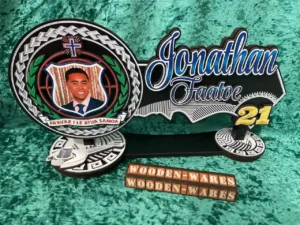
A design with a photograph is a keepsake. A design without one is a decoration. A clear portrait high resolution, good lighting, no heavy filtering placed thoughtfully in the layout creates an object that immediately signals: this was made for one specific person.
Use the best photograph available. Prepare two or three options and let the designer guide the choice. A slightly different angle or crop can significantly improve the final composition.
Dark photographs do not brighten in production. Blurry photographs do not sharpen. Use the best image, not the most recent one.
What colours are actually right?
There is a difference between colours that are fashionable and colours that are personal.
Gold and black will always photograph well. White and silver will always look clean. Pastels will always feel elegant. Bold primaries will always create energy.
But the right colour for this key is the birthday person’s colour. The shade they wear most often. The colour their room is decorated in. The tone they consistently come back to. A key built around those colours will feel personal in a way that a trending colour palette simply cannot replicate.
Colour psychology and design — how colour creates emotional response in celebration design.
What should the text say?
Name. Age. Date. One short message if the family wants one.
That is almost always enough.
Text competes with design for visual space. Too much of it and the key looks crowded. Too little and it loses its personal identity. The goal is a design where the name reads clearly from a distance, the age is prominent, and anything beyond that is short enough to support rather than overwhelm.
One message under ten words, from the family. Clean. Honest. No filler.
Should cultural or heritage details be included?
For many Australian families this is not optional it is essential.
A birthday key designed around Pacific Island heritage, Māori tradition, Samoan or Tongan cultural identity, Aboriginal design, or any other family background is not just more personalised. It is more meaningful in a way that transcends design preference.
Cultural details require specific briefing. Do not say “island design.” Say which island. Explain which patterns matter and why. Share examples if you have them. Name the colours that represent your family. Describe the symbols that carry meaning.
The more specific the brief, the more respectful and accurate the result.
What finish quality is acceptable?
A birthday key is a keepsake. It needs to look good in five years, not just on the day it arrives.
UV ink and acrylic paint produce visibly different results. UV ink bonds to the surface at a molecular level. The colours are sharper, deeper, and more durable. Acrylic paint sits on the surface and is significantly more vulnerable to fading and chipping over time.
Most birthday key makers still use acrylic paint. It is cheaper and requires no specialised equipment. UV ink technology requires a significant setup investment, which is why most makers avoid it.
Ask about the finish before placing an order. If the key is intended as a long-term display piece — something kept and shown for years the finish quality is not a minor detail.
UV curing technology in professional finishing applications.
Has the design draft been reviewed carefully?
This is the step most people rush.
The design draft is the only opportunity to catch mistakes before the key is made. Every detail should be checked before approval spelling of the name including any unusual spelling or accents, the age, the date, the photo placement and cropping, the colour accuracy, the text readability, the balance of the overall layout, and every cultural or personal element requested.
One careful review at the draft stage eliminates almost all of the disappointment that occasionally happens at delivery.
What the Ordering Process Should Look Like
A good ordering process follows a clear sequence.
You submit your details name, age, date, photo, colours, cultural notes, design preferences. You receive a fully rendered 3D design draft within 24 hours, at no charge, before any deposit. You review it, request revisions if needed, and approve when you are completely satisfied. You pay a deposit and production begins. You track the production process in real time. You receive a final photograph and a quality confirmation before delivery.
The process should feel collaborative and unhurried.
If at any point you are asked to approve a design you are not fully happy with, or if requests for revisions are resisted, that is worth noting. The draft stage exists precisely so the final result meets the brief exactly.
Learn about our free 3D draft process and 4-day turnaround.
Why Ordering Early Is Always the Right Decision
Fast turnaround is available.
That does not mean ordering late is a good idea.
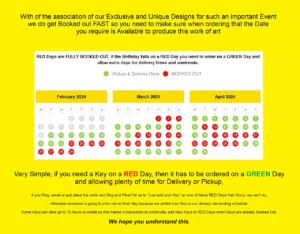
Ordering early gives more time to think carefully about the design brief. It allows for multiple rounds of design revisions if needed. It removes the pressure of a hard deadline from the production process. It means that if anything needs to be corrected — a name spelling, a colour adjustment, a layout change — there is time to fix it without stress.
A 21st birthday happens once. The key should not be a last-minute item.
What Separates a Good Key From a Forgettable One
There are hundreds of birthday key makers operating in Australia.
Most of them produce similar products at similar price points using similar materials. The difference between a key that gets kept and displayed for years and one that quietly disappears into a drawer is almost always a combination of two things: genuine personalisation and genuine craftsmanship.
Personalisation means the key was designed around the specific person receiving it not a template adapted slightly to include their name.
Craftsmanship means the finish holds up over time the colours stay sharp, the edges stay clean, the details remain readable years after the birthday.
Read real reviews from Australian families who have ordered custom birthday keys.
Both matter. Neither compensates for the absence of the other.
FAQ
What makes a good 21st birthday key in Australia?
A good 21st birthday key is designed specifically around the person receiving it their name, their photo, their cultural background, their colours and made with a finish that holds up over time. Personalisation and craftsmanship together produce a key worth keeping.
How do I choose the right design style for a 21st birthday key?
Start with the birthday person’s actual preferences — the colours they use, the aesthetic they live in, whether they prefer bold or restrained design. The right style is the one that reflects them specifically, not what is currently trending.
Should I add a photo to a 21st birthday key?
Yes, if the key is intended as a genuine keepsake. A clear, high-resolution portrait transforms a decorative piece into a personal object. Prepare two or three photo options and use the clearest image available.
What colours work best for a 21st birthday key?
The best colours are the birthday person’s colours — not general trends. Gold and black photograph well. Pastels feel elegant. Bold colours create energy. The right choice is whichever palette genuinely reflects the person.
How early should I order a custom 21st birthday key in Australia?
As early as possible. Even where fast production is available, ordering early allows time for design revisions, careful draft approval, and confident delivery before the party. Do not treat a custom keepsake as a last-minute item.
What should I check in the design draft before approving?
Check name spelling, age, date, photo placement, colour accuracy, text readability, overall layout balance, and every cultural or personal detail requested. One thorough review at the draft stage prevents almost all post-delivery issues.
The Key That Does Not End Up in a Box
The perfect 21st birthday key in Australia is not the most elaborate one.
It is the one designed honestly around the person receiving it their identity, their colours, their culture, their story and made well enough to still look good years after the party is a memory.
That combination of personal meaning and genuine quality is what keeps a birthday key on a shelf rather than in a box.
Get everything right at the design stage and the rest follows naturally.
See exactly how your key will look before you pay a single dollar.
Get your free 3D design preview.
Explore the full WoodenWares custom birthday key range.
